Inside Azure App Service Sandboxing: How Microsoft Secures Multi-Tenant Cloud Applications
A deep-dive into the architectural security mechanism that enables safe, isolated, and performant hosting for thousands of applications running side-by-side on shared infrastructure.
Introduction
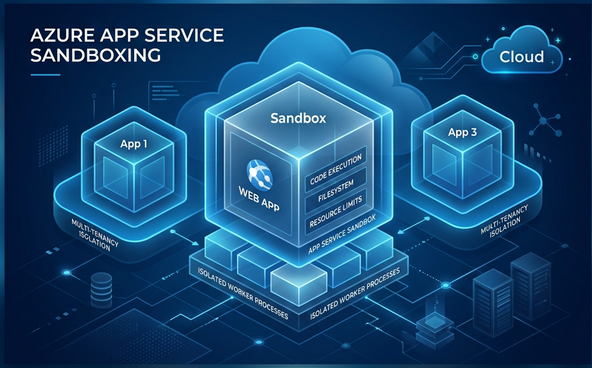
Azure App Service is a fully managed Platform-as-a-Service (PaaS) offering that enables developers to host web applications, APIs, and background services without managing underlying infrastructure. It abstracts server management, operating system maintenance, and runtime configuration, allowing organizations to focus entirely on application development.
Because Azure App Service operates in a multi-tenant environment, multiple customer applications run on shared infrastructure. To ensure security, stability, and fair resource allocation across tenants, Microsoft implements a robust sandboxing mechanism.
Sandboxing is a foundational architectural component that enables Azure App Service to provide secure, scalable, and reliable cloud hosting — allowing Microsoft to run thousands of customer applications on shared machines without compromising any tenant's security or performance.
What is Sandboxing?
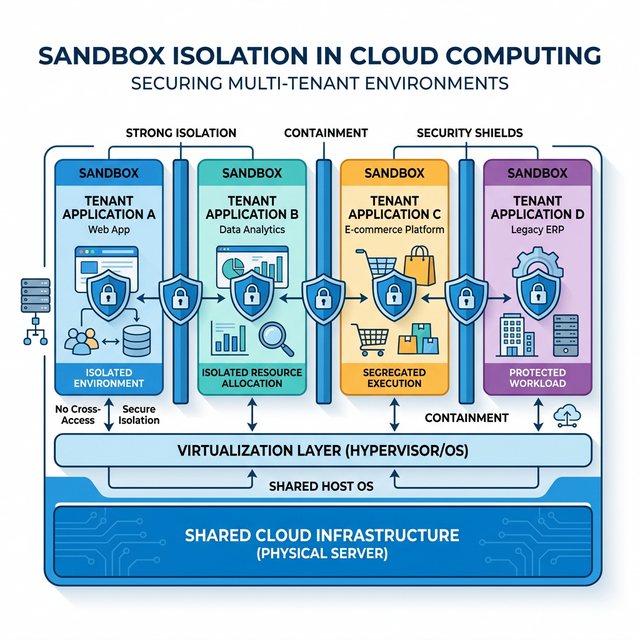
Sandboxing is a security mechanism that restricts an application's access to system resources and isolates it from other applications running on the same machine.
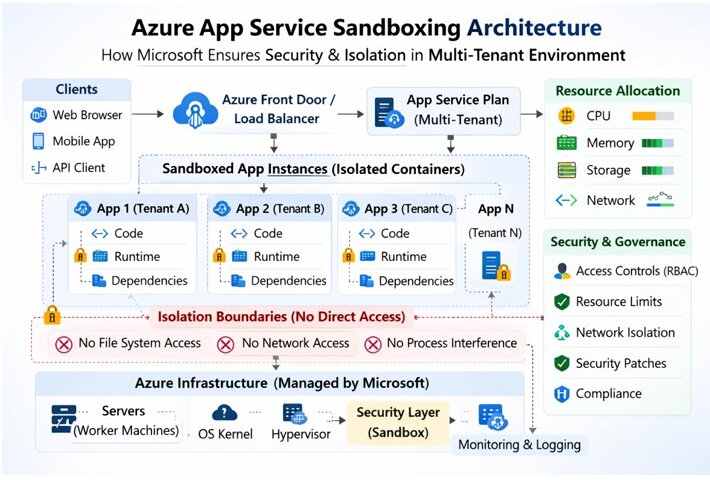
In Azure App Service, sandboxing ensures that:
- Applications cannot access unauthorized system resources.
- Applications cannot interfere with other tenant applications.
- Resource consumption is controlled and monitored.
This isolation protects both the underlying infrastructure and other customers hosted on the same worker server, ensuring predictable performance and strong security boundaries.
Need for Sandboxing in Multi-Tenant Architecture
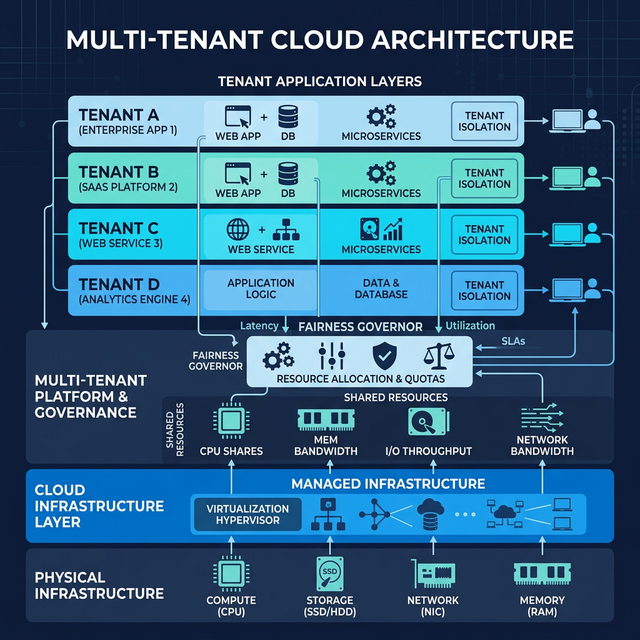
Azure App Service follows a multi-tenant architecture model, where:
- Multiple customer applications share worker machines.
- CPU, memory, disk I/O, and network bandwidth are shared resources.
- Infrastructure is centrally managed by Azure.
Risks Without Sandboxing
Without a proper sandboxing mechanism, several critical risks emerge across all tenants sharing the same infrastructure:
Resource Monopolization
One application could seize all available CPU or memory, starving neighbouring tenants of the resources they need.
Unauthorized System Access
A malicious or misconfigured process could attempt to access other tenants' data or critical OS-level resources.
Noisy Neighbor Problem
Performance degradation due to resource starvation caused by a co-located application consuming disproportionate resources.
Cross-Tenant Security Risks
Security vulnerabilities in one tenant's application could propagate and affect other tenants on the same host.
Benefits of Sandboxing
The sandboxing model delivers several enterprise-grade advantages that make Azure App Service a reliable choice for production cloud workloads.
Multi-Tenant Isolation
Every application runs in its own secure sandbox, fully separated from other tenants.
Strong Security Enforcement
Platform-level restrictions prevent unauthorized resource access and cross-tenant intrusion.
Predictable Performance
Resource governance ensures stable performance even under high multi-tenant load.
Resource Governance & Fairness
CPU, memory, and I/O are distributed equitably across all tenant workloads.
Reduced Blast Radius
A failure or compromise in one sandbox does not cascade to other tenants or the host OS.
High Availability
Isolated sandboxes allow Azure to maintain and upgrade workers with zero disruption to tenants.
Seamless Infrastructure Upgrades
Azure can patch, upgrade, and replace unhealthy workers transparently without affecting tenants.
Scalable Cloud Operations
Sandboxing enables Azure to scale infrastructure efficiently across thousands of hosted applications.
What Sandboxing Enables for Azure
Because of the sandboxing model, Microsoft's Azure operations team can perform the following actions without any tenants experiencing downtime or security risks:
OS and runtime patches can be rolled out across workers without disrupting running sandboxes or tenant applications.
Node.js, .NET, Java, and other runtime stacks can be updated for sandboxed applications seamlessly.
When a worker machine degrades or fails, Azure can migrate sandboxes to healthy workers automatically.
New worker machines are provisioned and integrated into the fleet while sandboxed workloads continue without interruption.
Conclusion
Azure App Service sandboxing is a core architectural and security mechanism that ensures safe and reliable multi-tenant hosting. By enforcing strict isolation boundaries, governing shared resource consumption, and enabling transparent infrastructure management, sandboxing is what makes Azure App Service a trustworthy PaaS platform at enterprise scale.
A clear understanding of sandboxing enables cloud engineers and DevOps professionals to design applications that align with platform constraints and fully leverage the advantages of managed cloud services — from predictable performance to zero-downtime deployments.
Key Takeaway
Sandboxing isn't just a technical detail - it's the backbone of trust in multi-tenant cloud platforms. Understanding it helps you build better, safer applications that are designed to thrive within Azure's managed environment.